Featured Gesture Sensing & Smart Robotic Toys
Explore our export-ready wholesale portfolio engineered with advanced gesture-recognition chips, multi-axis gyroscopes, and industrial-grade durability.
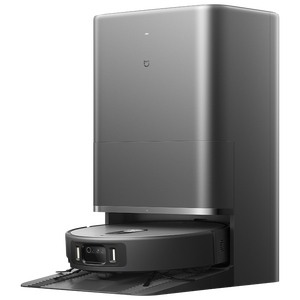
NEW XIAOMI mijia 6 Max OMNI Robot Vacuum Mop 35000Pa Self-Cleaning AI Obstacle Avoidance Camera Video Monitoring Detection Pet
View Details & Wholesale Specs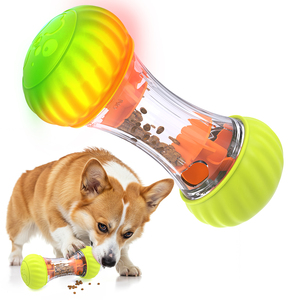
Wholesale Interactive Treat Dispensing Dog Toy Rechargeable LED Light up Puzzle Pet Slow Food Leaking Puppy Toy
View Details & Wholesale Specs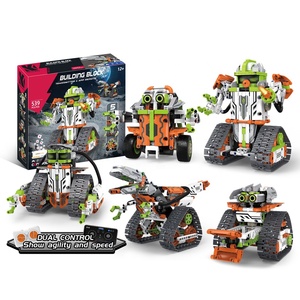
5 in 1 APP Programming Robot Building Blocks Model Toy 2.4G Dual Remote Controlled Electric Robotics Construction Building Toys
View Details & Wholesale Specs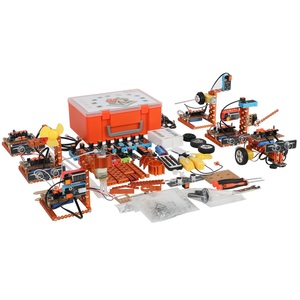
Hot Selling WEEEMAKE 15 in 1 Intelligent Smart Home Training Kit Educational Robot Kit for School Children DIY Build Smart Home
View Details & Wholesale Specs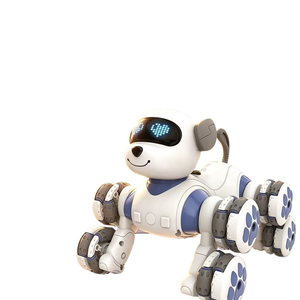
Smart Plastic Remote Control Robot Dog Eight Wheel Stunt Pink Cute Pet Toy For Kids
View Details & Wholesale Specs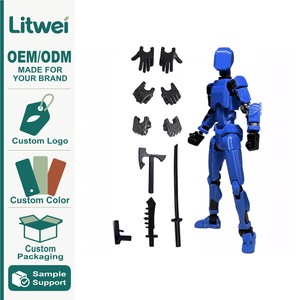
DIY Multi-joint Movable Robot Lucky 3D Printed Model Toys Simulation Action Figure Toy Birthday Gifts Desktop Decoration W24-909
View Details & Wholesale Specs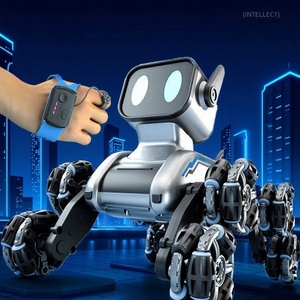
WF Gesture-Controlled Remote-Play Plastic Dog Robot Eight-Wheel All-Terrain 4x4 Off-Road Stunt Climbing Drift Car Toy
View Details & Wholesale Specs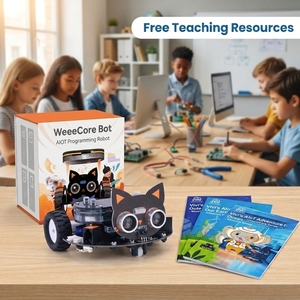
New Arrival Multi Functional Encoder Motor Drawing AI Robot for Kids Intelligent Voice Controlled Coding Discovery Set
View Details & Wholesale SpecsEnterprise Strengths: Why Leading Global Brands Partner with Shenzhen ATR Technology
In the highly competitive smart toy and consumer electronics market, sourcing from a reliable China wholesale gesture sensing toy supplier requires rigorous verification of engineering capability, supply chain stability, and international compliance. Operating from our state-of-the-art 10,000m² manufacturing facility in Guangdong’s Pearl River Delta, Shenzhen ATR Technology Co., Ltd. (AI Toy Robots) stands as an industry benchmark for OEM & ODM smart toy manufacturing.
With over two decades of dedicated production experience, our facility houses automated Surface Mount Technology (SMT) lines, precision plastic injection molding workshops, ultrasonic welding stations, and specialized electro-mechanical assembly units. We support global retailers, brand owners, and importers across North America, Europe, and Asia—including long-term production partnerships with industry leaders such as Walmart, Target, Costco, Lidl, Disney, and Miniso.
R&D Innovation & Hardware Integration Mastery
Our in-house engineering team comprises 35+ software developers, mechanical engineers, and micro-electronics specialists. We specialize in integrating 2.4GHz high-frequency RF modules, 6-axis MEMS inertial measurement units (IMUs), infrared proximity sensor arrays, and optical gesture-tracking chips into robust, child-friendly form factors. Whether you require somatosensory watch control, hand-wave tracking, or multi-terrain omnidirectional Mecanum wheel drive systems, our engineering infrastructure transforms initial concepts into mass-producible retail successes.
Comprehensive Quality Control & Zero-Defect Pipeline
To ensure high performance in demanding retail environments, every product line passes through a 12-inspector Quality Assurance team operating under strict ISO9001 guidelines. Our internal testing laboratory executes rigorous stress tests, including:
RF Signal Anti-Interference
100% testing of 2.4GHz band stability across 50+ concurrent device channels to guarantee zero signal drop.
Drop & Impact Resistance
1.2-meter multi-angle drop tests on concrete flooring to verify ABS shell integrity and solder-joint reliability.
Lithium Battery Safety
UN38.3 compliant overcharge, thermal shock, and short-circuit protection testing on all integrated Li-ion packs.
Industry Development Trends: The Evolution of Gesture Sensing Toys (2025–2030)
The global motion-controlled and gesture-sensing toy market is undergoing a structural technological shift. Basic single-sensor infrared toys are rapidly giving way to multi-modal somatosensory interaction platforms. B2B buyers and category managers must understand these fundamental technological shifts to build high-margin product portfolios.
| Technology Generation | Core Sensor Architecture | User Experience & Responsiveness | Commercial Market Fit |
|---|---|---|---|
| Gen-1: Basic Infrared | Single IR emitter/receiver pair | Binary detection (stop/start), limited to <10cm distance | Entry-level promotional novelties |
| Gen-2: Somatosensory Watch | 3-Axis Accelerometer + 2.4GHz RF | Directional tilt control (forward, reverse, left, right steering) | Standard RC stunt cars & basic robotics |
| Gen-3: Sensor Fusion (Current Standard) | 6-Axis Gyroscope + ToF IR + Mecanum Drive | 360° omnidirectional lateral drift, palm height elevation, dynamic gesture mapping | High-margin retail RC stunt vehicles & bionic robot pets |
| Gen-4: AI Vision & Spatial Tracking | Embedded Optical CMOS Camera + Edge AI Neural Chip | Human skeletal pose tracking, spatial gesture recognition, voice + gesture hybrid execution | Premium STEM educational robotics & AI companion toys |
Key Engineering Trends Shaping Product Development
1. Multi-Dimensional Kinetic Engineering: Modern gesture-controlled vehicles no longer rely on traditional front-wheel steering. By coupling gesture controllers with 8-wheel driving assemblies and Mecanum wheels, vehicles execute lateral strafing, 360-degree standing spins, and dynamic chassis transformation (on-road to off-road climbing modes) via intuitive wrist movements.
2. Edge-AI Integration & Hybrid Control: As smart toys merge with AI algorithms, gesture sensing is being integrated alongside real-time voice command processing. Future gesture toys allow users to command complex subroutines—such as "follow me" or "draw a square"—by combining a simple wave of the hand with verbal instruction.
3. Enhanced Ergonomics & Reduced Latency: Early somatosensory wearable controllers suffered from transmission latency and wrist fatigue. Modern 2.4GHz Frequency Hopping Spread Spectrum (FHSS) protocols have pushed control latency below 15 milliseconds, delivering instantaneous response rates that mirror video-game precision.
Future Procurement Trends: Strategic Sourcing Recommendations for Importers
As global retail channels prioritize product safety, compliance documentation, and ESG accountability, sourcing gesture sensing toys requires a comprehensive procurement strategy. Wholesale buyers must navigate several evolving procurement dynamics:
Strict Global Safety Mandates
Retail chains demand comprehensive test reports covering EN71 (Parts 1-3), EN IEC 62115 (Electric Toys Safety), CE, RoHS, ASTM F963, CPC, and FCC ID certifications. Working with an audit-ready factory eliminates customs hold-ups.
Modular OEM/ODM Customization
Importers are moving away from off-the-shelf catalog items toward customized industrial designs, unique brand colorways, proprietary gesture mappings, and custom retail packaging with multi-language manuals.
Sustainable Materials & Packaging
Recyclable ABS plastics, bio-based plush fabrics, soy-ink printed gift boxes, and plastic-free interior packaging trays are becoming core compliance parameters for EU and North American retail buyers.
Optimizing Total Cost of Ownership (TCO) in B2B Toy Sourcing
To maximize gross margins, procurement heads should evaluate suppliers based on landed cost rather than initial FOB unit price. Key cost-optimization levers include:
- CBM Packaging Density: Engineering compact gift box dimensions increases container loading capacity by up to 22%, dramatically cutting per-unit ocean freight charges.
- Universal Charging Standards: Transitioning legacy barrel-jack chargers to standard USB Type-C ports reduces accessory sourcing costs and simplifies global electrical compliance.
- Defect Rate Guarantees: Partnering with manufacturers that offer guaranteed defect rates under 0.5% and provide spare component buffer stock with every 20ft/40HQ container.
Essential technical, commercial, and logistical guidance for professional importers and wholesale buyers.
What is your Minimum Order Quantity (MOQ) for gesture sensing toys?
Which safety and electrical certifications do your gesture control toys hold?
How does the somatosensory gesture-control technology work?
Can we customize the gesture mapping, character branding, and packaging?
What is your typical production lead time for bulk wholesale orders?
How do you ensure battery safety for rechargeable gesture toys?
What warranty and quality assurance terms do you offer B2B importers?
Ready to Elevate Your Wholesale Toy Lineup?
Partner with China's leading gesture sensing toy manufacturer. Contact our B2B sales engineering team today for factory-direct price sheets, OEM customization consults, and sample requests.
Get a Quote