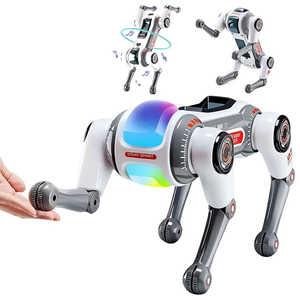
Bionic Dynamics
Dynamic Actuators
2.4GHz Telemetry
Standardized baseline platforms ready for custom PCB modification, Japanese voice model localization, Tuya IoT firmware provisioning, and tailored housing assemblies.
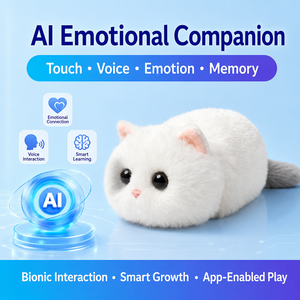
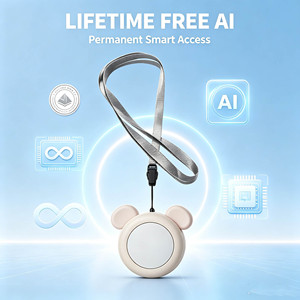

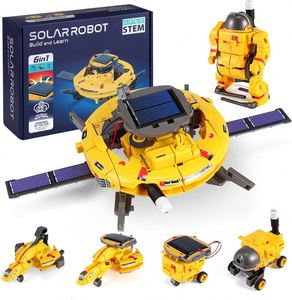
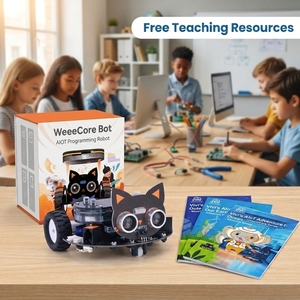
The Greater Tokyo Area presents one of the most sophisticated, safety-demanding, and sociologically unique robotics landscapes globally. With dense urban dwelling conditions, a rapidly escalating super-aging society, and intensive GIGA School digital learning initiatives implemented by MEXT (Ministry of Education, Culture, Sports, Science and Technology), mass-market consumer and service robotics require granular hardware and algorithmic adaptation.
Tokyo apartments (typically 30–65 m²) enforce strict decibel standards and non-marking physical parameters. Our OEM pet robots feature silent brushless motors, multi-link soft silica dampening, and contactless gesture navigation preventing interior disruption.
Engineered for wards such as Setagaya, Ota, and Nerima where solitary elderly households are concentrated. Bionic units incorporate empathetic Keigo (honorific Japanese) dialogue engines, vital routine scheduling, and secure check-in telemetry via local cloud connectors.
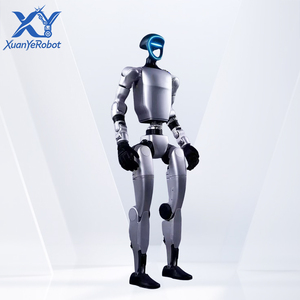
Deployable into Tokyo prep-schools (Juku) and private elementary programs. Encoder motor-driven units and humanoid platforms support visual block programming, logic recursion experiments, and natural dialogue language tutoring without safety hazards.
Strategic hardware and telemetry adaptations engineered specifically to satisfy Japanese regulatory shifts, consumer behavioral patterns, and edge AI sovereignty.
To succeed within commercial retail channels (such as Yodobashi Camera, Bic Camera, and specialized system integrators across Akihabara), hardware architectures must achieve stringent hardware safety while operating compliant data transmission pipelines:
| Domain | Legacy Industry Standard | Next-Gen Tokyo OEM Requirement (ATR Engineering) |
|---|---|---|
| Wireless Protocol | Generic FCC/CE 2.4GHz & 5GHz | TELEC (MIC Japan Technical Regulations Conformity) & VCCI Class B certification for low radiated emissions. |
| Natural Language Processing | Cloud-only English/Chinese LLM APIs | Hybrid Edge/Cloud NLP running localized Japanese LLMs (supporting nuanced Keigo honorifics and regional Kansai/Kanto idioms). |
| Privacy & Governance | Global baseline terms | Strict APPI (Act on the Protection of Personal Information) compliance, encrypted AES-256 cloud sync, no biometrics extraction. |
| Battery Safety | Standard UN38.3 | METI PSE mark registration, integrated thermal shutdown protection, and high-impact structural cells for earthquake drop resilience. |
Transitioning computational load from public server backbones onto onboard Neural Processing Units (NPUs), securing sub-200ms audio-visual feedback loops without continuous WAN access.
Incorporating custom surface transducers within plush and vinyl robotic outer chassis, providing purring sensations, heartbeat emulations, and calibrated warmth generation.
Utilizing high-torque, coreless micro-servos tested beyond 500,000 continuous articulation cycles, guaranteeing longevity under demanding Japanese warranty protocols.
Backed by over two decades of precision plush, composite shell, and automated electromechanical assembly in Guangdong’s Pearl River Delta industrial corridor, our specialized factory infrastructure eliminates intermediary trading overhead while delivering Tier-1 engineering precision directly to Japanese procurement teams.
Step 1: NDA + Baseline Architecture Selection
Step 2: Japanese Voice & Firmware Porting
Step 3: PSE / TELEC Pre-Compliance Lab Testing
Step 4: Golden Master Sampling Approval
Step 5: Mass Injection, SMT Assembly & Clean Packaging
Step 6: Direct Yokohama / Tokyo Port Sea/Air Freight
Clear, uncompromised answers covering certification, bilingual cloud deployment, packaging, minimum quantities, and testing.
We provide full pre-testing documentation and collaborate directly with accredited testing organizations (such as JET or TÜV Rheinland) to secure technical conformity certificates (Giteki / TELEC) for Wi-Fi/Bluetooth modules and METI PSE circular registration for lithium battery configurations.
Yes. While we standardly integrate Google Gemini or ChatGPT for overseas retail, our flexible firmware stack allows direct API calls to localized sovereign LLMs, NTT/SoftBank conversational engines, or specialized private cloud instances hosted within Tokyo AWS/GCP regions to adhere strictly to personal data guidelines.
For standard baseline models utilizing in-stock mechanical molds and localized Japanese firmware/packaging, our MOQ starts at 500 to 1,000 units. For full ODM execution involving completely unique exterior tooling (silicone/ABS molds, bespoke plush fabrics), baseline programs commence at 3,000 units.
Japanese consumer goods demand flawless cosmetics and zero tolerance for functional failure. Our factory enforces a 4-tier inspection workflow: incoming raw materials (IQC), in-process circuit board SMT verification (IPQC), 100% 48-hour burn-in and servo cycle testing, followed by pre-shipment AQL 1.0 cosmetic and packaging audit.
Ready to initiate your custom robotics program or request sample prototypes for testing?
Get Catalog