Featured Smart Drawing & AI Educational Robots
Direct from China's leading OEM/ODM production lines: High-precision stepper motor robotics, optical card-recognition painting systems, and AI-enabled STEM learning companions.
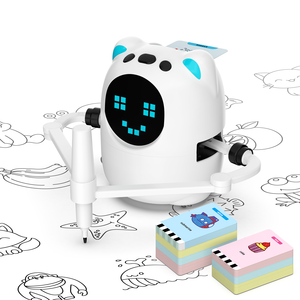
Factory Smart Drawing & Painting Robot Toy with 100 Cards 5 themes Light & Sound-Educational Learning Machine for Ages 5-13
View Product Details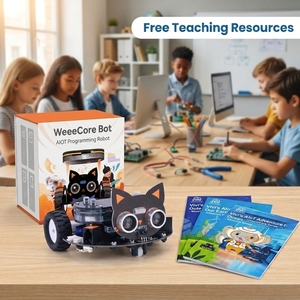
New Arrival Multi Functional Encoder Motor Drawing AI Robot for Kids Intelligent Voice Controlled Coding Discovery Set
View Product Details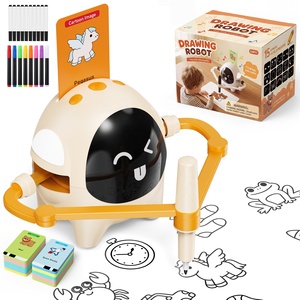
Smart Kids Drawing Robot Artist 200 Cards Music Interactive Educational Art Toy for 3+ Year Olds STEM Birthday Gift
View Product Details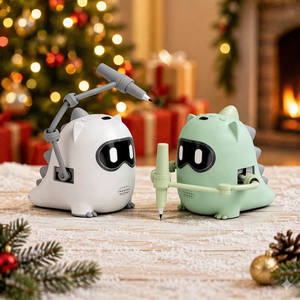
AI-powered Drawing Robot for Children, Low-noise Rechargeable Model, a Top Choice for Birthday Gifts for Boys and Girls
View Product Details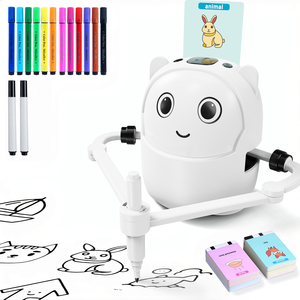
Kids Smart Drawing Robot Toy Montessori Educational Painting Learning Toy Cards Induction Recognition Auto Drawing Machine Set
View Product Details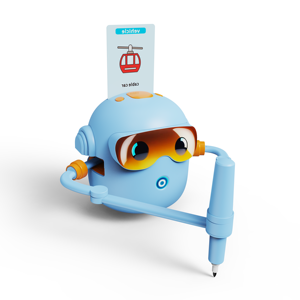
Enlightenment Interaction Pictures Drawing Robot for Kids Educational Learning Automatic Children Learn Painting Robots Toys B1
View Product Details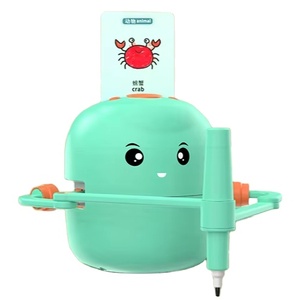
JXD Educational Toddlers Drawing Robot Machine Flash Card Drawing Enlightenment Painting Teaching AI Robot for Kids Study
View Product Details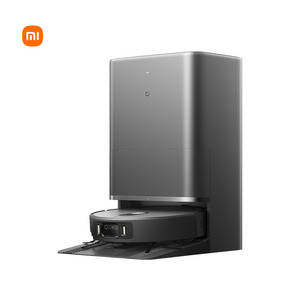
XIAOMI MIJIA 6 Max OMNI Robot Vacuum Mop 35000Pa Self-Cleaning AI Obstacle Avoidance Camera 35000Pa Robot Home Vacuum Cleaner
View Product DetailsExecutive Summary: The Strategic Evolution of Children's Drawing Robots in China
The global educational toy market is undergoing a structural paradigm shift. As early childhood development frameworks prioritize STEM (Science, Technology, Engineering, and Mathematics) and STEAM (adding Art) learning methodologies, traditional non-interactive toys are rapidly being superseded by intelligent, robotics-assisted educational devices. At the epicentre of this manufacturing evolution is China's advanced electronics ecosystem—specifically Guangdong province's industrial clusters across Shenzhen, Dongguan, and Shantou.
Chinese OEM and ODM manufacturers produce over 85% of the world's commercial children's drawing robots. What began as simple line-tracing mechanical novelties has transformed into sophisticated cyber-physical educational systems featuring embedded optical sensors, micro-stepper motor actuators, generative AI image processing, voice synthesis, and wireless application integration.
For international buyers, importers, and brand owners, navigating China's supplier landscape requires a deep understanding of technical capabilities, quality control protocols, component sourcing, and intellectual property compliance. This whitepaper analyzes the technology roadmaps, manufacturing benchmarks, procurement trends, and regulatory requirements essential for executing successful B2B sourcing strategies.
Core Technological Pillars of Next-Gen Drawing Robots
Understanding the hardware architecture and software stack engineered by premier Chinese factories.
Micro-Stepper Precision Actuation
Utilizing sub-millimeter micro-stepper motors paired with high-torque gearboxes, modern drawing robots render precise vector paths, curves, and fine line art with repeat positioning accuracy within <0.05mm.
Optical Card & OCR Sensing
Embedded high-speed optical camera modules and RFID reader arrays parse flashcards instantaneously, translating printed visual raster data into real-time G-code motion sequences for the pen plotter mechanism.
Voice Synthesis & Dialogue
Integrated acoustic chips, multi-language speech engines, and noise-canceling microphone arrays allow interactive step-by-step drawing tutorials, letter pronunciation, and interactive storytelling.
Engineering Benchmarks: Evaluating China Supplier Capabilities
When auditing potential manufacturing partners in China, commercial buyers must look beyond aesthetic exterior designs and evaluate internal electronics and mechanical component selection. Below is a comparative technical matrix illustrating the specifications found across basic, mid-tier, and flagship enterprise drawing robot platforms produced in China.
| Performance Metrics | Entry-Level Educational | Mid-Tier Interactive STEM | Flagship AI & Voice Robot |
|---|---|---|---|
| Target Age Group | Ages 3 – 6 Years | Ages 5 – 9 Years | Ages 6 – 13+ Years |
| Main Controller MCU | 8-bit RISC / 32-bit Cortex-M0 | 32-bit ARM Cortex-M4 Core | 32-bit Dual-Core AI SoC / RISC-V |
| Motion Control Architecture | DC Motor + Open-Loop Gear | Closed-Loop Stepper Motor | Dual-Axis Servo / Micro-Steppers |
| Recognition System | Optical Color Sensor / Line Follower | RFID Tag / High-Speed CMOS Camera | AI Vision Camera Module + OCR |
| Card Library Included | 50 – 80 Basic Cards | 100 – 200 Cards (Multi-theme) | 200+ Interactive Cards + Cloud Sync |
| Power Management | 4x AA Dry Batteries | 1200mAh Lithium-ion (Type-C) | 2600mAh Li-Po (Fast Charge + Protection) |
| Acoustic / Audio Feature | 8-bit Mono Speaker (Buzzer) | 16-bit Voice Prompt Speaker | Dual Microphones, AI Speech Synthesis |
| Target FOB Unit Cost (5k Units) | $8.50 – $12.00 USD | $14.50 – $19.50 USD | $22.00 – $35.00 USD |
Future Sourcing & Purchasing Trends (2026 – 2030)
To maintain retail margins and market differentiation, global buyers must align their product development roadmaps with emerging technological and commercial trends in the Chinese manufacturing ecosystem.
1. Generative AI & Cloud Content Synchronization
The market is rapidly transitioning from static flashcard-bound drawing execution to generative cloud-connected drawing intelligence. Next-generation drawing robots are being equipped with Wi-Fi/Bluetooth Low Energy (BLE) microcontrollers (such as ESP32-S3 series) that interface with secure kid-safe LLMs (Large Language Models). Children can speak a prompt (e.g., "Draw a friendly astronaut on Mars"), and the cloud server parses the request into a simplified vector SVG, transmitting the drawing path back to the robot within seconds.
2. Modular Hardware Customization (ODM Flex Platforms)
Leading Chinese suppliers are departing from rigid, single-purpose plastic tooling. Instead, tier-1 factories offer standardized internal PCBA and motion-chassis platforms while allowing buyers to customize external silicone sleeves, plastic injection shells, branding elements, and accessory card decks. This modular approach reduces ODM tooling lead times from 120 days down to under 45 days, significantly lowering upfront capital expenditure for new brand launches.
3. Eco-Friendly Materials & Sustainable Supply Chains
Driven by strict European Union green deal directives and consumer preferences in North America, top factories are integrating PCR (Post-Consumer Recycled) ABS plastics, biodegradable PLA components, and non-toxic soy-based ink flashcards into their standard BOMs (Bill of Materials). Importers seeking premium positioning must verify supplier FSC certifications for paper components and REACH compliance for all synthetic polymers.
Factory Excellence: Why Partner With Our Ecosystem
Combining state-of-the-art SMT production, rigorous quality control, and decades of global export compliance.
End-to-End SMT & Plastic Injection
In-house Surface Mount Technology (SMT) lines for PCBA assembly alongside high-precision injection molding machines ensure total quality control from raw silicon to finished chassis.
International Toy Safety Compliance
100% production compliance with EN71-1/2/3, EN IEC 62115, ASTM F963-17, CPSIA, CE, RoHS, and FCC directives. Factory audits under ISO 9001, BSCI, and Disney FAMA standards.
Comprehensive Localization & Firmware Customization
Multi-lingual voice recording natively embedded into system memory. Custom firmware development supporting local regional languages, localized nursery rhymes, and tailored educational curricula.
Robust Supply Chain & Agility
Integrated relationships with tier-1 semiconductor distributors, lithium battery manufacturers, and specialized packaging facilities, enabling scaling from initial 1,000-unit pilot orders to 100,000+ unit mass production runs.
Factory Audit & Quality Assurance Protocol for Global Importers
When purchasing high-tech educational toys from China, establishing a multi-tier Quality Assurance (QA) and Quality Control (QC) framework is non-negotiable. Defective robotics products lead to high consumer return rates, brand damage, and potential regulatory product recalls.
1. Incoming Quality Control (IQC)
Top manufacturers implement strict IQC procedures before components enter the assembly line. Key raw materials tested include:
- Micro-Motors & Gears: Measured for noise levels (<45dB operating sound), rotational torque consistency, and power draw stability under load.
- Optical Sensors & Cameras: Tested against color spectrum charts and high-density barcode grids under variable light conditions (200 Lux to 2000 Lux).
- Rechargeable Batteries: 100% capacity checking, overcharge/over-discharge protection circuit (BMS) verification, and UN38.3 transport safety validation.
2. In-Process Quality Control (IPQC)
During assembly, automated jig stations verify pen-arm calibration, card-feeding alignment, and PCBA soldering integrity. Functional test stations perform automated line-drawing diagnostics to ensure vector accuracy before final housing enclosure enclosure.
3. Outgoing Quality Control (OQC) & AQL Inspection
Final shipments must be inspected following ISO 2859-1 (ANSI/ASQ Z1.4) sampling procedures under **AQL 1.0 Major / AQL 2.5 Minor** acceptance criteria. Critical tests performed on finished boxed units include:
- 1-Meter Drop Test: Drop tests performed on concrete floors across six axes to confirm structural housing durability and motor alignment stability.
- Pen Pressure & Stroke Uniformity Test: Verifying continuous pen contact without tearing paper or lifting prematurely during complex drawing patterns.
- Acoustic & Speaker Distortion Test: Checking voice clarity and volume limits in compliance with child hearing protection regulations (EN71-1 sound level limits).
Partner with China's Premier Drawing Robot OEM/ODM Manufacturer
Looking for a custom ODM solution, custom firmware localized in your market language, or competitive factory-direct FOB pricing? Connect with our engineering and export team today.
Inquire NowProcurement FAQ: Sourcing Children's Drawing Robots from China
Expert answers to critical procurement, engineering, and regulatory questions asked by international buyers.
What is the typical Minimum Order Quantity (MOQ) for OEM/ODM drawing robots?
How do Chinese factories ensure compliance with child safety standards like EN71 and ASTM F963?
Can we customize the flashcards, drawing content, and voice audio for our local market?
What pen types and paper formats are compatible with these drawing robots?
What is the production lead time from sample confirmation to mass shipment?
How are lithium-ion battery shipping regulations handled for export shipments?
Strategic Sourcing Roadmap: Moving from Inquire to Market Leadership
Sourcing children's drawing robots from China offers global brands an extraordinary opportunity to capture high-margin market share in the rapidly expanding educational technology sector. Success requires choosing a factory partner that combines advanced hardware engineering, responsive firmware customization, uncompromised quality assurance, and transparent communication.
By leveraging the insight, benchmarks, and technical guidelines outlined in this industry whitepaper, buyers can confidently evaluate supplier credentials, negotiate optimal commercial terms, and launch world-class educational robotics products that delight children and parents alike.
Ready to Develop Your Next Best-Selling AI Drawing Robot?
Get in touch with our B2B export specialists for complete product catalogs, factory audit reports, sample requests, and competitive OEM/ODM price quotes.
Inquire Now