High-Velocity Smart Toy Models for the Japanese Retail Market
Curated specifically for Japanese retail distribution channels (Yodobashi Camera, Bic Camera, Toys"R"Us Japan, and Rakuten Ichiba), each product integrates pre-certified radio frequency modules, safe child-friendly materials, and low-latency multilingual processing.
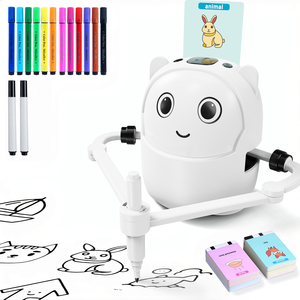
Kids Smart Drawing Robot Toy Montessori Educational Painting Learning Toy Set
- Optical Sensor: QR/Vector Card Recognition
- Audience: 3-8 yrs (Japanese/English bilingual)
- Certification: ST Part 1-3 physical safety
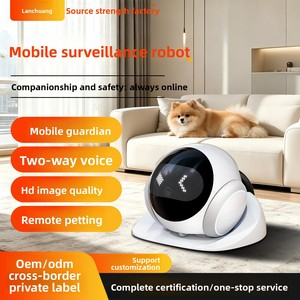
AI-Powered Pet Companion Robot with App Control & 4G HD Camera
- Connectivity: 4G LTE / Dual-Band Wi-Fi (TELEC)
- Features: Laser chase, snack dispenser
- App Protocol: Tuya IoT Japan Cloud compliant
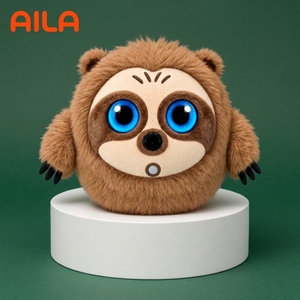
CADOTHY AILA Skin-Safe Soft Plush Hypoallergenic Children AI Toy
- Fabric: OEKO-TEX Standard 100 Microfiber
- Audio: Dual MEMS mic, whisper detection
- Safety: No detachable parts, food-grade ABS core
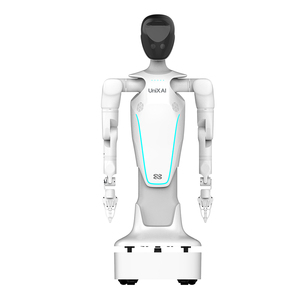
Unix AI Wanda 2.0 Intelligent Wheeled Humanoid Robot for Companionship
- Mobility: 360° Omnidirectional Silent Wheels
- AI Engine: Edge-LLM with empathetic Japanese dialog
- Battery: PSE Certified 5000mAh Li-ion battery
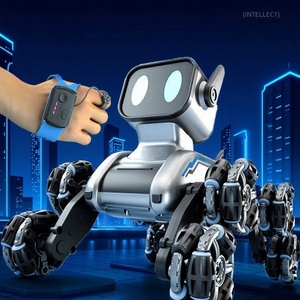
WF Gesture-Controlled 8-Wheel All-Terrain 4x4 Stunt Climbing Dog Car
- Control: 2.4GHz Somatosensory Watch + Remote
- Motors: High-torque brushless crawler system
- Compliance: Japan Radio Law compliant transmitter
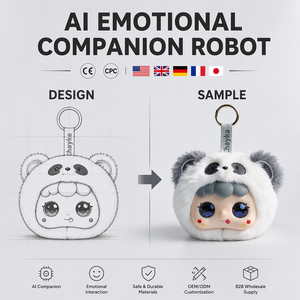
Secure AI Interactive Plush Doll with Voice Chat & Parental App
- Security: End-to-end encrypted child telemetry
- Dimensions: 11-30cm customizable height
- Parental App: Filtering, bedtime lockout timer
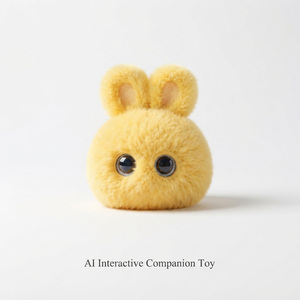
OEM Customized AI Emotional Companion Soft Plush Educational Robot
- Emotion Engine: Expressive dynamic matrix eyes
- Voice Cloning: Parents' voices synthesizable in minutes
- LLM Choice: Gemini, GPT-4o, or local Japanese model
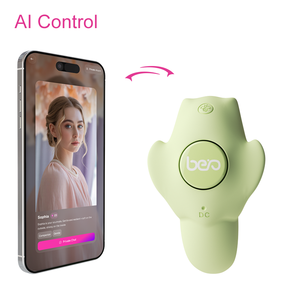
AI Smart APP-Controlled Wearable Bee Device (Whisper Quiet <40dB)
- Noise Profile: <40dB acoustic stealth rating
- Material: FDA / Food-grade medical skin-safe silicone
- Waterproof: IPX6 sealed chassis, magnetic charging
Strategic Insights: The Structural Evolution of Japan's Smart Toy Sector
While Japan navigates a declining national birthrate (shōshika), overall spending per child has reached historical highs. Sourcing directors and importers must align hardware development with structural demographic catalysts, strict RF certifications, and the cultural philosophy of Iyashi (emotional soothing).
The "Six Pockets" Phenomenon
In modern Japanese households, parents and both sets of grandparents channel financial resources toward a single child or grandchild. Rather than buying multiple cheap disposable playthings, consumers actively prefer high-ticket, durable, Montessori-certified, and AI-enabled hardware that accelerates cognitive linguistics and emotional security.
MEXT GIGA School STEAM Synergy
The Ministry of Education, Culture, Sports, Science and Technology (MEXT) GIGA School Program has equipped every elementary and junior high student with a tablet. Consequently, parents demand physical smart toys that bridge screen-based coding with physical kinematics—such as our Auto-Drawing Card Recognition Robots that teach visual sequencing without screen strain.
"Iyashi" & Cross-Demographic Robotics
Japan boasts a rich cultural history of embracing robotic companions (from Karakuri to Aibo). Today, smart plush companions are not merely juvenile items; they are bought by single professionals in Tokyo and seniors in super-aging prefectures (chō-kōreika shakai) seeking comforting interaction, bedtime meditation, and gentle habit reminders.
| Regulatory Standard | Governing Body | Technical Verification Scope | ATR Export Guarantee |
|---|---|---|---|
| TELEC (GITEKI) Mark | Ministry of Internal Affairs and Communications (MIC) | Radio Law Article 38-24 certification for 2.4GHz, 5GHz, BLE 5.3, and 4G frequency emissions. Prevents RF interference. | Pre-installed certified RF modules; complete circuit schematics and test sample support for Japanese registered CABs. |
| ST Mark (ST-2016 / ST-2020) | Japan Toy Association (JTA) | Part 1 (Mechanical/Physical safety, pinch points, chocking hazards), Part 2 (Flammability), Part 3 (Chemical toxicity, heavy metals, phthalates). | All injection plastics use food-grade ABS/PP; plush skins pass strict Japanese drop-weight tensile seam inspections. |
| PSE Certification | Ministry of Economy, Trade and Industry (METI) | Electrical Appliance and Material Safety Law covering lithium-ion polymer cells, energy density exceeding 400 Wh/L, and USB-C controllers. | Circular PSE marks on all internal batteries, thermal runaway prevention circuitry, and verified Japanese importer notification (Jian-todoke) support. |
| APPI Privacy Compliance | Personal Information Protection Commission (PPC) | Child speech processing data storage, biometric voice footprinting, cloud encryption, and parental consent frameworks. | Tuya Smart IoT Cloud utilizing Japanese AWS Tokyo server nodes; zero retention of raw voice audio without cryptographic salt hashing. |
Localized Application Scenarios in Japanese Daily Life
How our smart toy portfolio solves spatial, social, and developmental hurdles unique to Tokyo, Osaka, and regional Japanese lifestyles.
Acoustic Compliance in Dense Mansions
Japanese apartment complexes (mansion) have zero tolerance for neighborhood noise bleed. Our companion robots feature hardware decibel limiters (capped under 50dB at 1 meter), brushless drive dampeners, and whisper-listening algorithms that allow bedtime play without vibrating through tatami or floorboards.
Early Bilingual English Immersion (Eigo Kyōiku)
With English mandatory from the 3rd grade in Japan, parents seek natural phonetic environments. Our AI plush dolls offer real-time conversational switching between polite native Japanese (keigo and child-friendly desu/masu) and clear Oxford/General American English, correcting pronunciation gently without intimidating the child.
Screen-Free Montessori Habit Building
Concerns over early-onset smartphone myopia have led Japanese kindergartens (yōchien) to discourage digital screen exposure. Our drawing robots and companion plush guide children to wake up, wash hands, brush teeth (hamigaki), and clean up toys (katazuke) through tactile cards, vocal cadence, and kinetic praise.
Parent Voice Cloning for Working Households
With both parents working full-time in dual-income homes (tomo-bataraki), children often spend hours in after-school care (gakudō hoiku). Using our Tuya-powered app, parents record a 60-second voice sample, enabling the toy to read traditional Japanese folktales (Momotarō, Kaguya-hime) in the comforting timber of their own voice.
Why Tier-1 Japanese Importers Partner with Shenzhen ATR Technology Co., Ltd.
Over two decades of craftsmanship, combined with silicon-level AI architecture and audited Japanese quality control (QC) discipline.
20+ Years OEM/ODM Precision
Spanning a sprawling 10,000m² manufacturing facility in Guangdong's Pearl River Delta hub, we operate 8 automated SMT assembly lines, clean-room injection workshops, and sewing halls staffed by 500+ skilled artisans adept at high-density stitching and electronic insertion.
Japanese-Standard QC Inspection
Our dedicated 12-person quality assurance team executes 100% full-check inspections mirroring Japanese Kaizen and AQL 1.0/2.5 protocols. Every batch undergoes needle-detection, drop testing, button pull-force checks (exceeding 70N), and RF burn-in thermal aging cycles.
Custom LLM Firmware Localization
We do not deliver generic chatbot chips. Our engineering team integrates regional LLM configurations—allowing clients to select Google Gemini, ChatGPT, or DeepSeek—fine-tuned for natural Japanese sentence ending particles (ne, yo, desu) and culturally sensitive safety content filters.
Tuya IoT Ecosystem Integration
Seamlessly link toys to the Tuya Smart Life framework. We furnish fully whitelabeled iOS/Android applications localized into Japanese kanji, katakana, and hiragana, with GDPR and Japanese APPI-compliant server orchestration hosted securely in Tokyo AWS clusters.
Audited Retail Credibility
Having produced certified plush and interactive goods for global leaders including Disney, Walmart, Costco, Target, and Miniso, our facilities consistently pass strict social compliance, child labor, fire prevention, and supply-chain traceability audits.
Agile MOQ & Tokyo/Kobe Port Logistics
We support tier-based procurement—from test runs of 1,000 units for boutique crowdfunding launches (Campfire/Makuake) to 50,000+ volume containerized shipments routed via direct Shenzhen-Tokyo/Osaka sea freight with consolidated documentation.
Frequently Asked Questions: Japanese B2B Sourcing & Compliance
Comprehensive answers addressing regulatory hurdles, import duties, software hosting, and custom private label terms for Japanese trading firms (Shōji) and retailers.
How do you handle TELEC (GITEKI) certification for wireless smart toys entering Japan?
Every wireless product exported to Japan must comply with the Radio Law (Radio Equipment Technical Regulations Conformity Certification). We utilize pre-certified Bluetooth and Wi-Fi modules (such as ESP32 and Realtek chipsets) that already possess valid TELEC certification IDs permanently engraved on the shielding casing. If you are creating a completely bespoke ODM enclosure or customized PCB antenna, our engineering laboratory collaborates directly with accredited Conformity Assessment Bodies (CABs) like DSP Research or TELEC Japan, managing test samples, schematics, and filing so that the GITEKI mark and ID number are legally printed on your product body and packaging box.
What are the exact procedures and requirements for passing the Japan ST Mark standard?
The ST (Safety Toy) Mark established by the Japan Toy Association (JTA) involves three critical safety sections: ST Part 1 (Mechanical and Physical Properties) assesses small parts ingestion hazards, sharp edges, pull-force resistance for stuffed eyes/seams (tested to 70N tension), and drop impact endurance. ST Part 2 (Flammability) ensures slow burn rates of fabrics and polyfill. ST Part 3 (Chemical Safety) strictly regulates heavy metals (lead, arsenic, cadmium), vinyl chloride monomers, and 6 specific phthalates. Our manufacturing utilizes only non-toxic food-grade injection polymers and OEKO-TEX certified fabrics. We supply full testing batches to JTA-designated labs (such as BCTC, SGS, or TUV) before final packaging sealing.
Can the conversational AI engine handle honorifics, child slang, and latency issues in Japan?
Yes. Generic Western translation layers fail in Japan because children utilize specific phonetic particles and parents expect polite, encouraging language (Desu/Masu tone without crude slang or hallucinatory facts). During our firmware configuration phase, we tune the LLM system prompts using Google Gemini or GPT-4o with dedicated Japanese context grounding. Furthermore, our voice synthesis pipelines are integrated with Japanese low-latency neural TTS (Text-to-Speech) engines hosted on Tokyo edge CDNs, achieving an average response round-trip latency under 1.2 seconds, ensuring an organic, responsive conversational flow.
What is the minimum order quantity (MOQ) for custom Japanese packaging and software?
For existing hardware designs with customized Japanese retail packaging (four-color window box, Japanese instruction manuals / Torisetsu, warranty cards, and TELEC label printing), our baseline MOQ starts at 1,000 units. For bespoke ODM plush exterior design, custom mascot mold tooling, or tailored companion app branding, typical project volumes range from 3,000 to 5,000 units. We also accommodate phased deliveries (e.g., initial 1,000-unit air express trial followed by 4,000 units via sea freight to Yokohama or Osaka Port).
How is children’s voice telemetry kept safe under the Japanese APPI law?
The Act on the Protection of Personal Information (APPI) in Japan imposes stringent restrictions on transmitting personal biometric records. Our smart toys utilize edge-processing microcontrollers for the wake-up word ("Hey Robot"), meaning the internal microphone is not streaming audio continuously to the cloud. When a dialogue exchange occurs, voice audio is converted to tokenized text at the edge, encrypted via TLS 1.3 with AES-256 protocols, and transmitted directly to the parent’s private Tuya cloud tenant. Raw audio voice files are deleted immediately after transcription unless expressly authorized for parent voice-cloning archives.
What shipping Incoterms and lead times apply for Japanese deliveries?
We regularly quote FOB Shenzhen, CIF Tokyo / Yokohama / Kobe, and DDP Tokyo (handling all Japanese customs clearance, consumption tax, and inland delivery). Tooling and golden sample production takes 14 to 21 business days. Mass production cycles require 30 to 40 days following sample sign-off. Transit time via fast sea vessel from Shenzhen/Hong Kong to Tokyo or Osaka port is only 4 to 6 calendar days, allowing buyers to rapidly restock seasonal inventory for Golden Week, Summer Obon, or Christmas retail surges.
Launch Your Japanese Smart Toy Campaign Today
Consult with our senior hardware engineers and bilingual OEM project managers. Obtain compliance roadmaps, CAD mockups, and competitive tiered B2B pricing within 24 business hours.