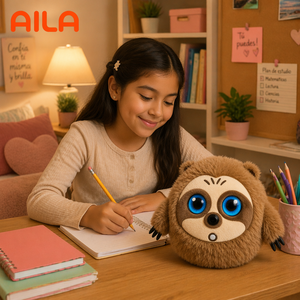
Precision Manufacturing Catalog
Intelligent Robotic Toys & Cognitive Plush Ready for Distribution
Turnkey smart hardware platforms optimized for educational, entertainment, and therapeutic applications across New Zealand and Oceania.
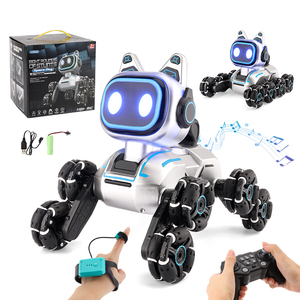
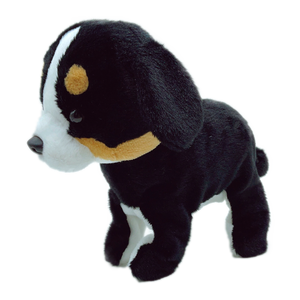
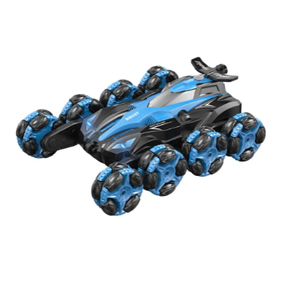
20+
Years Manufacturing Excellence
10,000m²
Modern Production Hub
500+
Skilled Hardware Specialists
100%
AS/NZS Compliance Track Record
Domain Integration
Localized Applications for AI Robotic Toys Across New Zealand
Tailoring high-performance robotics to the unique social, educational, and ecological landscape of Aotearoa.
Te Whāriki Early Learning & Bilingual Classrooms
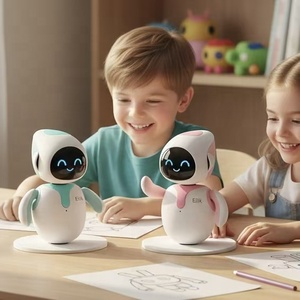
Under New Zealand's indigenous early childhood curriculum, Te Whāriki, relational interactive play is paramount. Our custom ODM robotic toys can be pre-configured with dual-language conversational datasets (English and Te Reo Māori), empowering children to absorb vocabulary, local mythology (pūrākau), and natural sentence structures through real-time adaptive feedback loops.
Neurodivergent & Pediatric Emotional Therapy
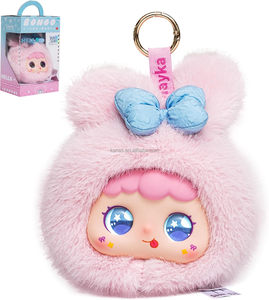
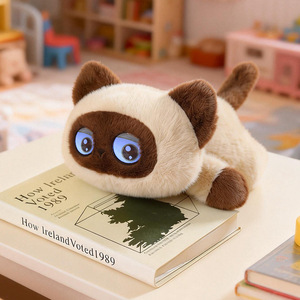
Kiwi healthcare systems and occupational therapists are adopting companion robotic plush toys with emotional computing engines. Embedded with tactile pressure sensors, heartbeat vibration simulators, and non-judgmental generative vocal nodes, our smart toys act as non-pharmacological interventions for ASD and ADHD soothing in clinical and domestic settings.
Eco-STEM and Native Wildlife Preservation Tech
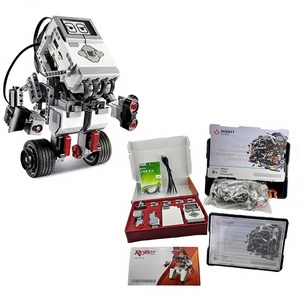
Aligning with New Zealand's Predator Free 2050 and conservation ethics, consumer brands frequently commission native fauna replicas (Kiwi bird, Kakapo, Kea) driven by programmable block engines. These kits inspire primary and intermediate students across Auckland, Wellington, and Christchurch to master physical coding and environmental science through hardware.
Oceania Market Intelligence
Emerging Horizons: AI Robotic Toy Trends in the New Zealand Market
The consumer electronics and intelligent hardware landscape in New Zealand is experiencing an unprecedented structural transformation. Driven by high digital penetration rates, progressive educational standards, and discerning parental expenditure, the smart toy sector is breaking free from deterministic "gimmick" play and advancing into full-scale Cognitive Assistive Companionship. For brand founders, retail chain category managers, and educational distributors sourcing from overseas manufacturing hubs, several structural developments are reshaping commercial outcomes:
1. Privacy-First Edge Computing and Stringent NZ Privacy Act Compliance
Following updates to the New Zealand Privacy Act 2020 and global child protection frameworks, Kiwi parents demand total data sovereignty. Traditional cloud-tethered recording toys face significant consumer resistance. Leading manufacturers are shifting to Hybrid Edge-Cloud Architecture. In this ecosystem, Wake-Word Engine (WWE) recognition and localized semantic filtering execute directly on embedded low-power DSPs (Digital Signal Processors), while encrypted data transmissions require verifiable cryptographic keys managed by parents via Tuya-based or standalone iOS/Android infrastructure.
2. Sustainable Biopolymers and Circular Lifecycle Packaging
The New Zealand market leads the Southern Hemisphere in environmental stewardship. Importers are penalised by shifting consumer sentiment if electronic hardware incorporates single-use non-recyclable virgin plastics. ATR Technology addresses this by offering OEM clients shell housings engineered from certified post-consumer recycled ABS (rABS), organic plant-derived PLA fibers for plush outer shells, and non-toxic, soy-ink FSC-certified unbleached corrugated packaging that directly complies with the NZ Waste Minimisation Act.
3. Micro-Localization: The Rise of Indigenous Dialect & Accent Training
A perennial frustration among New Zealand toy importers has been the prevalence of North American or standard British synthetic speech modules, which often stumble over colloquial nuances and indigenous terminology. Modern cognitive toy factories are deploying neural voice-cloning pipelines configured with specific Aotearoa regional phonetic datasets, ensuring correct pronunciation of geographic placenames, native species, and basic conversational Māori greetings.
| Performance Dimension | ATR Technology (OEM/ODM Factory) | Generic Toy Factories | Local NZ Assembly Workshops |
|---|---|---|---|
| Compliance Certification | Pre-tested to AS/NZS ISO 8124, RCM, CE, FCC, RoHS | Basic EN71 only; lacks RCM radio approval | Relies on third-party overseas test reports |
| Cognitive AI Integration | Choice of LLM: ChatGPT, Gemini, or DeepSeek Edge API | Hardcoded microchips with fixed voice loops | Software layer only; limited hardware tooling |
| Acoustic Hardware | Array beamforming mics with background noise gate | Single low-sensitivity condenser mic | Standard off-the-shelf sound boards |
| Scalability & Cost | Direct industrial injection & sewing (1,000 - 100k units) | High MOQ requirements; static molds | Extremely high labor overheads; small batches |
Procurement Guidelines
New Zealand B2B Procurement FAQ
Essential regulatory, technical, and logistical answers for Kiwi toy importers and retail buyers.
What specific safety and radio certifications are required for AI toys entering New Zealand?
All robotic and electronic toys sold in New Zealand must comply with the AS/NZS ISO 8124 safety series (covering mechanical, physical, flammability, and toxic chemical thresholds under the Consumer Guiding Standards). Furthermore, because AI robotic toys utilize Wi-Fi or Bluetooth low-energy (BLE) frequency spectrums, they must secure the Regulatory Compliance Mark (RCM) to prove adherence to ACMA/NZ Radio Spectrum Management (RSM) electromagnetic compatibility (EMC) regulations.
How do you support custom Large Language Model (LLM) selection for overseas retail?
During the ODM development phase, we configure firmware architecture to match your deployment market. For New Zealand and global Western distribution, we seamlessly integrate localized APIs for OpenAI (ChatGPT) or Google Gemini. These implementations feature customizable prompt safety guardrails to ensure output content is kid-safe, wholesome, educational, and fully free from inappropriate hallucinations.
What is your production capacity, and what Minimum Order Quantities (MOQs) apply?
Our 10,000m² manufacturing facility in the Pearl River Delta operates 12 specialized production lines capable of outputting over 150,000 robotic units monthly. For custom ODM platform integration, our baseline runs begin at flexible tiers: under 1,000 units for pilot trial launches, 1,000 to 3,000 units for commercial brand retail rollout, and scalable volume exceeding 5,000 units for major regional distribution.
How is parental control and children's privacy preserved?
Our intelligent smart toy lineup connects to companion Tuya-powered software solutions (or proprietary white-labeled apps). Parents retain master permissions: reviewing real-time transcripts, setting operational screen/chat timers, toggling microphone mute states, or deleting stored audio tokens. All wireless communications use end-to-end TLS 1.3 AES-256 encryption to prevent any unauthorized interception.
What are typical production lead times and ocean shipping timelines to Auckland / Tauranga?
Standard prototyping and engineering verification tests (EVT) take 15–20 days. Mass production averages 30–35 days depending on component availability and custom fabric treatments. Transit times via maritime sea freight from Shenzhen/Hong Kong to the ports of Auckland or Tauranga generally require between 14 to 21 days, allowing seamless supply chain scheduling ahead of Kiwi fourth-quarter holiday sales.
Factory Authority
Why Leading Brands Partner with ATR Technology
Combining two decades of plush precision manufacturing with state-of-the-art AI robotic engineering.
20+ Years Manufacturing Heritage
Operating a modernized 10,000m² factory footprint with more than 500 seasoned sewing, mechatronic assembly, and QA technicians. We have successfully supplied top global enterprise retailers, including Walmart, Lidl, Target, CVS, and Costco, with an unblemished compliance and delivery record.
Rigorous 12-Tier QC Protocol
Every single unit undergoes rigorous physical testing: battery drop cycles, pull-force joint tension testing (90N requirement), wireless signal attenuation, electromagnetic isolation, and decibel level calibration to protect sensitive young ears according to acoustic safety standards.
Full-Stack OEM & ODM Flexibility
From initial industrial ID sketch, injection mold tooling, PCB layout architecture, and voice cloning integration, down to custom retail window-box design, our in-house R&D engineering crew brings client conceptual visions into verified retail-ready reality.