Featured 8-Wheeled Bionic Platforms & Intelligent Controllers
Tested for high mechanical duty cycles, tropical operational environments, and rapid commercialization across Brazilian consumer electronics and educational robotics distribution networks.
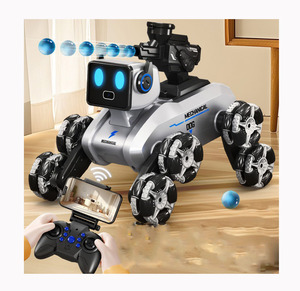
Intelligent 8K Remote Control Robot Dog Car for Kids Electric RC Animal with Eight Wheels Gesture Sensing Features
Features independent 8-wheel articulation, dual-mode gesture somatosensory recognition, and 360-degree rotational drift geometry for indoor and outdoor terrains.
Review Specifications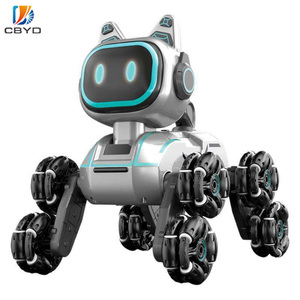
2.4G Smart Eight-Wheel Smart Robot Dog Toy for Kids Remote Control RC Cars with Gesture Sensing Climbing Transforming Features
Bi-directional swing-arm transformation mechanism with off-road obstacle climbing clearance, designed for multi-unit synchronized play without signal interference.
Review Specifications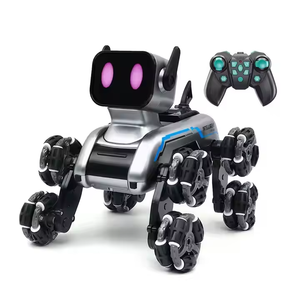
Educational Toys Children's Play Time Light Music 8-Wheel Robot Dog Model RC Stunt Car Lithium Battery Learning Machine 5-7
Equipped with high-capacity rechargeable lithium power cell, integrated audio-visual rhythm cues, and foundational algorithmic movement sequences.
Review Specifications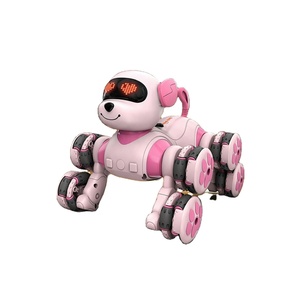
2026 New Model Eight-Wheel Stunt-Capable Smart Pink Plastic Robot Dog Obstacle Avoidance Pet Toy for Teens Adults
Infrared front-facing obstacle mitigation array paired with custom high-impact polymeric exterior shell engineered for drops, roll-overs, and stunts.
Review Specifications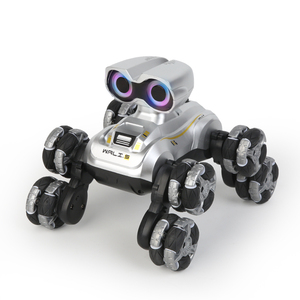
Children's Mechanical Pet Dog Gesture Sensing RC Stunt Robot Dog Swing Arm Eight-wheel Four-wheel Drive Off-road Vehicle Toy Car
Hybrid drive chassis featuring dual independent motors and torque-distributing planetary differentials to conquer uneven gradients and outdoor grass.
Review Specifications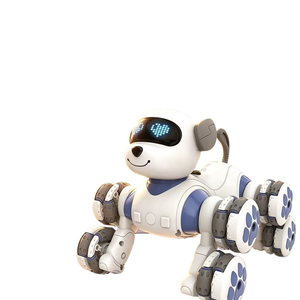
Smart Plastic Remote Control Robot Dog Eight Wheel Stunt Pink Cute Pet Toy For Kids
Compact form factor with expressive emotional lighting cues, intuitive ergonomic remote transmitter, and impact-resistant ABS child-safe construction.
Review Specifications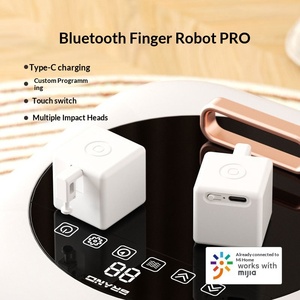
Smart Home Automation DIY, Finger Touch Robot , AI Voice & App Remote Switch Control ,Timing Function Type-C Charging
Auxiliary micro-robotic mechanical actuator featuring Tuya-ecosystem compatibility, voice-assistant linking, and programmable schedule triggers.
Review Specifications
AI Plush Toy Smart Companion Voice Chat Talking Robot Toy Educational Stuffed Animal Long Memory WiFi For Kids
Cloud-connected multimodal dialog core supporting English, Brazilian Portuguese, and Spanish, featuring voice-cloning capabilities and parent controls.
Review SpecificationsStrategic Trade Analysis: The Surge of Wheel-Leg Bionic Robotics in Brazil
The Latin American robotics and smart companion toy sector is experiencing an unprecedented structural transition. Brazil, representing over 42% of South America's total consumer electronics consumption, has emerged as the prime target market for next-generation robotic hardware. Traditional quadrupedal (four-legged) walking robots, while visually striking, have historically suffered from severe commercial limitations: high bill-of-materials (BOM) costs due to expensive precision servos, fragile joint assemblies prone to gear stripping, and excessive power draw that curtails battery longevity to under 25 minutes. The 8-wheeled robot dog architecture (also known as the wheel-leg hybrid bionic platform) solves these fundamental engineering bottlenecks by merging mechanical quadruped geometry with high-speed, high-efficiency wheeled propulsion.
By employing four articulated swing-arms—each fitted with dual independent drive wheels (totaling 8 active traction points)—these machines deliver exceptional kinematic flexibility. They navigate rough paving stones (paralelepípedos), thick lawn carpets, domestic rugs, and steep urban curbs characteristic of Brazilian residential and urban topographies across São Paulo, Rio de Janeiro, and Curitiba. For Brazilian importers, distributors, and department store retail buyers (such as Ri Happy, PBKIDS, and major e-commerce leaders on Mercado Livre and Amazon Brasil), importing 8-wheeled robot dogs represents a dramatic margin advantage: defect rates fall below 0.6% compared to 4.8% for articulated-leg alternatives, shipping density per cubic meter increases by 34%, and unit retail landing prices align perfectly with the purchasing power of Brazil's burgeoning middle class (Classes B and C).
Commercial & Educational Deployments Across Brazil
How Brazilian B2B procurement teams, educational institutions, and retail chains maximize ROI with 8-wheeled bionic robotics.
Private Bilingual & STEM Schools
Educational networks across the Southeast and South regions (Colégios in SP, PR, and RS) integrate 8-wheeled robot dogs into Maker Spaces and robotics laboratories. Students analyze differential wheel speeds, kinematic transformation dynamics, and basic 2.4GHz RF communication protocols without risking delicate motor joint failures.
Omnichannel Retail & Toy Chains
From shopping mall anchor stores to Mercado Livre "MercadoLíder Platinum" storefronts, the high visual appeal of gesture-sensing stunt transformations drives impulse purchasing and viral unboxing campaigns on social channels (TikTok, Instagram Reels, and YouTube Brasil), generating rapid inventory turnover.
Corporate Brand Activations & CCXP
Tech conventions such as Campus Party Brasil, Comic Con Experience (CCXP), and Rio Innovation Week utilize fleets of custom-branded 8-wheeled robot dogs for booth engagement, interactive giveaways, and automated promotional delivery, taking advantage of the robot's rapid maneuverability and crowd-stopping LED arrays.
Domestic Companion & Tech Gifting
Positioned as an accessible, futuristic alternative to live pets for apartment dwellers in dense metropolitan zones (Copacabana, Pinheiros, Moema), these machines provide interactive amusement, gesture-controlled dynamic response, and durable operation around children and household pets.
AgTech Facility & Warehouse Prototyping
Universities and agritech incubators in interior agro-hubs (Ribeirão Preto, Londrina, Cuiabá) purchase these resilient 8-wheel chassis as low-cost experimental platforms for sensor payloads, mapping test runs, and low-level ground reconnaissance across irregular greenhouse and agricultural soil conditions.
Structural Superiority: 8-Wheeled Hybrid vs. Conventional Systems
Objective hardware performance metrics highlighting why Brazilian importers prefer the 8-wheel configuration.
| Evaluation Vector | 8-Wheeled Wheel-Leg Bionic Robot | Traditional 4-Legged Servo Dog | Standard 4WD Stunt RC Car |
|---|---|---|---|
| Terrain Adaptability | Exceptional (Swing arms overcome obstacles up to 85mm; climbs stairs & grass) | Moderate (Struggles with slick tiles and deep grass; slow traversal) | Low (Easily inverted or immobilized by rocks, curbs, or deep gaps) |
| Mechanical Failure Rate | < 0.6% (Low-wear continuous rotary motors; shielded planetary gearheads) | > 4.8% (Repetitive cyclic shock loads strip delicate servo output gears) | 1.8% - 3.2% (Fixed axle stress breaks suspension under aggressive impacts) |
| Battery Run Duration | 45 - 65 minutes per single 3.7V / 7.4V lithium-ion pack (rolling efficiency) | 18 - 25 minutes (continuous servo stall current draws high continuous amperage) | 20 - 35 minutes (limited space for optimized cell packaging) |
| Kinematic Transformability | High (Spreads, contracts, inverts chassis, stands vertically, rotates 360°) | Fixed posture range (limited to predefined bio-mimic gaits) | None (Rigid rectangular chassis with fixed wheel alignment) |
| Brazilian Import Duty Impact | Optimized tariff classification (toy/educational RC), lower base purchase cost | Excessive base CIF value results in disproportionately high ICMS/IPI tax burdens | Low base price, but severe margin compression due to market saturation |
Navigating Brazilian Trade Compliance: INMETRO & ANATEL Regulations
Importing advanced consumer electronics and smart robotic toys into Brazil requires meticulous execution of federal compliance standards. Shipments landing at the Port of Santos, Paranaguá, or Viracopos International Airport face stringent automated and manual customs inspections managed by the Receita Federal do Brasil (RFB) and regulatory surveillance bodies. Shenzhen ATR Technology Co., Ltd. integrates target market compliance directly into the preliminary production and molding phases, mitigating risks of impoundment, fines, or return-to-origin orders.
1. INMETRO Safety Certification (Portaria 302/2021 & Portaria 563/2016): Robotic toys designated for consumers under 14 years old must comply with Brazilian toy safety mandates based on NM 300 standards (equivalent to EN71 and ASTM F963). Our manufacturing lines utilize certified virgin ABS resin devoid of hazardous plasticizers (phthalates) and lead-free soldering conforming to international RoHS directives. Electrical safety evaluations, including lithium-ion thermal runaway prevention and battery enclosure screw-retention integrity, are pre-tested in accredited testing laboratories to ensure direct conformity upon Brazilian customs clearance.
2. ANATEL Radio Frequency Homologation (Resolução nº 715): Every 8-wheeled robot dog utilizing 2.4GHz remote control, gesture-sensing watch transmitters, or Bluetooth/Wi-Fi wireless communication modules falls under ANATEL's Category II telecommunication equipment regime. We utilize pre-homologated frequency-hopping spread spectrum (FHSS) chips that minimize harmonic interference and adhere precisely to the maximum EIRP power limits permitted across the 2400–2483.5 MHz spectrum in Brazil, facilitating swift technical dossier approval by Designated Certification Bodies (OCDs).
Tariff & Tax Engineering
Navigating the complex "Custo Brasil" (II - Import Duty, IPI - Industrialized Products Tax, PIS, COFINS, and state ICMS) requires accurate NCM (Nomenclatura Comum do Mercosul) tariff classification. We assist your freight forwarders with precise classification under NCM 9503.00 for optimal fiscal efficiency.
Localized Portuguese Packaging
In full compliance with Brazil's Consumer Defense Code (Código de Defesa do Consumidor - Lei 8.078/90), our ODM department provides custom bilingual or Portuguese-exclusive retail packaging, user manuals, age rating icons, and battery warning labels ready for legal shelf distribution.
Direct Maritime Routes to Santos
Optimized container loading plans from Shenzhen and Ningbo ports to Santos, Itajaí, and Suape. Moisture-barrier outer master cartons protect sensitive electronic micro-switches and battery cells from the high humidity encountered during equatorial maritime transit.
Enterprise Manufacturing Capabilities & OEM/ODM Excellence
Backed by over two decades of precision manufacturing excellence, Shenzhen ATR Technology Co., Ltd. operates a vertically integrated 10,000 m² production base in the heart of the Guangdong Pearl River Delta electronics manufacturing corridor. We maintain seamless logistics access to major deep-water ports in Shenzhen and Hong Kong. Our engineering ecosystem bridges advanced industrial design, high-pressure injection molding, automated surface mount technology (SMT), and rigid acoustic/RF testing protocols.
Our workforce of over 500 skilled assembly technicians and a dedicated 12-member Quality Assurance inspection division inspect every production run across six sequential checkpoints: raw material chemical analysis, SMT solder paste inspection (AOI), motor torque degradation testing, dynamic drop/impact resilience tests, continuous 4-hour battery burn-in cycles, and 100% final wireless range verification. Having successfully delivered verified ODM production contracts for global brand leaders—including Disney, Walmart, Costco, Target, and Miniso—we possess the institutional capability and financial stability necessary to execute multi-container export contracts with strict adherence to delivery milestones.
Multimodal AI Voice Integration
Looking beyond pure RC platforms, we offer full integration of edge AI and cloud-based LLMs (including ChatGPT, Google Gemini, and customized Brazilian Portuguese conversational engines) for hybrid soft-robotic and companion models, backed by secure end-to-end data encryption.
Modular Tooling & Mold Customization
Modify chassis aesthetics, colorways (such as specialized vibrant or cyberpunk themes), wheel-leg geometries, and packaging configurations. Low minimum order thresholds (MOQs) allow Brazilian importers to test localized market demand before committing to full container loads (FCL).
Comprehensive Testing Records
Every lot exported to Brazil is accompanied by exhaustive mill test certificates, CE, RoHS, EN71, EN IEC 62115, and ASTM F963 laboratory dossiers, providing complete legal protection and transparency for your company’s compliance archive.
Frequently Asked Questions for Brazilian Importers
Practical guidance regarding commercial terms, logistics, customs clearance, and technical customization.
What are the primary Brazilian import regulations (INMETRO & ANATEL) for 8-wheeled robot dogs?
What is the standard production lead time and maritime transit time to the Port of Santos?
Can the retail packaging and instruction manuals be localized into Brazilian Portuguese?
What are the Minimum Order Quantities (MOQ) and sample evaluation policies?
How do you handle spare parts, motor reliability, and after-sales support?
What international payment terms and commercial currencies are supported?
Scale Your Robotics Inventory in Brazil
Contact our senior engineering and export trade directors today to receive comprehensive wholesale catalogs, FOB/CIF pricing matrices, and technical compliance dossiers tailored for Brazilian market entry.