AI toys are moving beyond simple lights and sound. Some can answer questions, recognize spoken commands, tell stories, or adapt games to a child’s responses. For global buyers, the challenge is not finding a clever feature. It is choosing a product that works reliably at home, in classrooms, and across different languages and markets.
This guide introduces ten AI toys worth considering in 2026. It focuses on practical details: the quality of interaction, age suitability, durability, battery life, connectivity, language support, and how clearly each product explains its data practices. A child asking a plush companion to repeat a bedtime story may reveal more about usability than a long feature list. Small details matter. So do repair options, software updates, and responsive customer support. Buyers should check current product information and local requirements before ordering, since specifications and availability can change by region.
A polished demonstration is not proof of lasting value. Some toys may need a stable internet connection; others may offer limited features offline. Marketing language can also make “intelligent” sound more capable than the toy feels in everyday use. That deserves a closer look. The selections below are intended as a practical starting point, not a universal ranking. The right choice depends on the child, the setting, and the buyer’s expectations. A little skepticism is useful—and perhaps one feature will matter less than you thought.
How AI Toys Combine Artificial Intelligence with Play
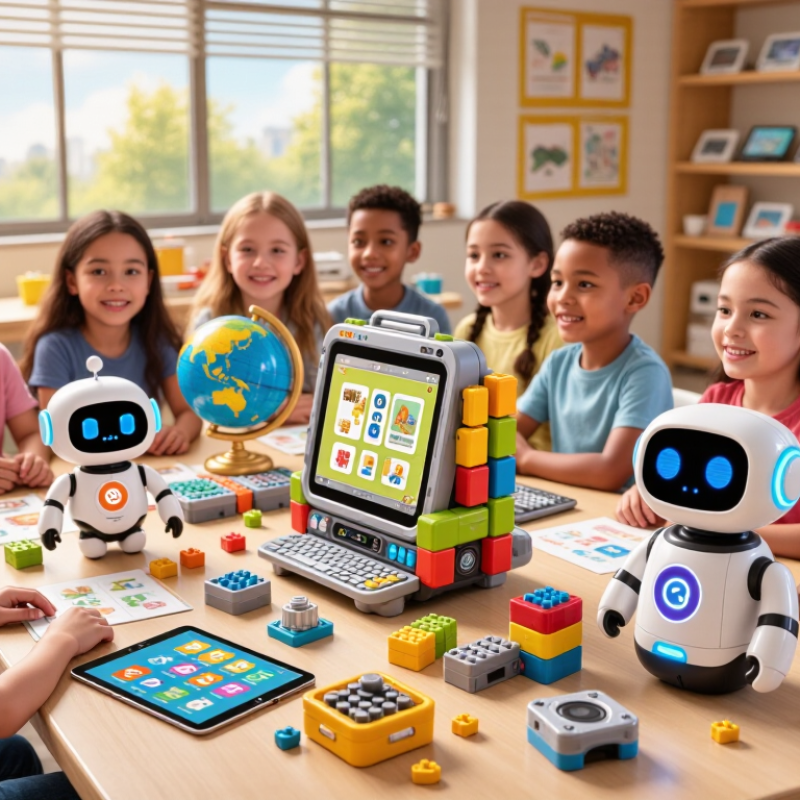
AI toys combine artificial intelligence with familiar forms of play: talking dolls, responsive robots, drawing companions, and building kits. A child might ask a small robot to invent a space mission, then move paper planets across the living-room floor. The toy’s software can adjust its replies or activities to the child’s choices. The play still needs imagination. That matters.
For global buyers, the key question is not whether a toy uses AI, but how that feature supports play. Look for age-appropriate prompts, clear setup instructions, and controls that let adults review settings. Check whether a toy needs an internet connection, what information it collects, and how updates are handled. These details affect daily use as much as the toy’s appearance. A bright screen may attract attention, but durable buttons and understandable instructions often matter more after the first week.
AI does not make every play session better. Replies can feel repetitive, speech recognition may struggle in noisy rooms, and a child may prefer an ordinary building set. Buyers should test toys with realistic expectations and consider language support, repair options, and accessibility for different users. One limitation is easy to overlook: a toy that works well in a product demo may behave differently in a busy home. Good design leaves room for children to lead, pause, and create their own rules.
Top 10 AI Toys for Global Buyers in 2026? - How AI Toys Combine Artificial Intelligence with Play
A practical comparison of ten AI toy categories. These are product types, not a ranked list; features, age suitability, connectivity, and data practices vary by product and market. Check the specific product documentation before purchasing.
| AI Toy Category | How AI Can Support Play | Typical Play Experience | Connectivity to Check | Key Buyer Considerations | Good Fit For |
|---|---|---|---|---|---|
| AI Plush Companion | Voice recognition and conversational software can enable responsive dialogue, stories, or character-based interactions. | Talking, imaginative role-play, and question-and-answer activities. | Some models process speech on-device; others may require Wi-Fi, an app, or cloud services. | Review microphone controls, data storage and deletion options, parental controls, and the stated age range. | Families seeking character-led, conversational play. |
| Interactive AI Robot | Sensors and software can help a robot respond to voice, movement, touch, or its surroundings. | Movement, commands, games, and simple cause-and-effect exploration. | Check whether setup, updates, or specific functions require a phone app or internet access. | Compare durability, battery life, safety information, language support, and the availability of replacement parts. | Children interested in robots and hands-on interaction. |
| AI Coding Robot | Some kits combine programmable actions with adaptive guidance, speech input, or visual coding tools. | Building sequences, solving challenges, and testing simple programs. | Check device compatibility, app requirements, and whether lessons work offline. | Look for clear learning materials, age-appropriate components, and a progression from guided tasks to open-ended coding. | Early learners exploring logic, sequencing, and introductory coding. |
| Adaptive Learning Toy | Software may adjust questions or activities based on a child's answers and progress. | Practice activities in areas such as letters, numbers, or problem-solving. | Find out whether progress is stored locally or in an online account and whether connectivity is needed. | Check curriculum alignment, privacy settings, accessible design, and whether adults can manage profiles. | Families looking for guided practice alongside adult support. |
| AI Drawing and Creativity Kit | Image or pattern recognition can support prompts, feedback, or interactions with a child's artwork. | Drawing, making, and experimenting with visual ideas. | Some products use a connected camera, tablet, or companion app; verify how images are handled. | Review camera permissions, image retention, offline options, and whether feedback encourages original creation. | Children who enjoy art, design, and creative experimentation. |
| AI Storytelling Toy | Language software can generate or adapt spoken stories and respond to simple prompts. | Listening, choosing story directions, and making up characters or scenes. | Check whether stories are downloaded, streamed, or generated through an online service. | Review content controls, supported languages, voice interaction settings, and how new content is provided. | Children interested in listening, language, and imaginative storytelling. |
| AI Language Learning Toy | Speech-processing features can offer pronunciation practice or conversational language activities. | Listening, speaking, vocabulary games, and simple dialogue practice. | Confirm supported languages, internet requirements, and compatibility with local devices. | Check the quality and scope of language content; speech recognition may vary by accent and environment. | Multilingual households and learners practicing a new language. |
| Smart Building Kit | Sensors or software may respond to how a child assembles, moves, or programs components. | Constructing models and exploring movement, cause and effect, or basic engineering concepts. | Check if programming tools require a compatible computer, tablet, or app. | Review small-part warnings, expansion options, instructions, and whether components are reusable across projects. | Children interested in construction, design, and STEM activities. |
| AI Pet or Creature Toy | Responsive software can simulate changing reactions to voice, touch, movement, or play routines. | Care routines, pretend play, and interactive games. | Find out whether personalization depends on an account, an app, or a persistent internet connection. | Check how interactions are reset, whether the toy records audio, and how behavior is explained to children. | Children who enjoy nurturing and imaginative pet play. |
| AI-Enabled STEM or Vision Toy | A camera or sensor system may identify objects, patterns, or actions and use them in learning activities. | Observation, classification, puzzles, and guided experiments. | Verify camera or sensor permissions, supported devices, and which features work without internet access. | Review privacy documentation, lighting and recognition limitations, accessibility, and the educational content provided. | Curious learners who enjoy observation and interactive experiments. |
FAQS
Options include conversational plush toys, voice robots, coding robots, drawing boards, story projectors, and robotic pets. Each suits different interests.
Language toys offer listening games, while coding robots turn block-based instructions into movement. A small rover can explore around chair legs.
No. Accents, background noise, or unclear speech can affect recognition. Some replies may feel repetitive. Not magic.
Ask what play or speech data is stored. Check whether parents can review or delete it, and disable microphones or cameras.
Some features may need an app or stable Wi-Fi. Check offline functions before buying, especially if home connectivity is weak.
Test the toy in the child’s intended language. Accents and noisy rooms may change how well it responds.
Check battery life, volume controls, washable surfaces, replacement parts, warranty terms, and return options. Import charges may also apply.
Compare durability, repair access, local support, and independent reviews. A simple toy that works reliably may be enough. Listings can be vague.
Conclusion
This guide explores how AI toys blend artificial intelligence with play to create more interactive, responsive experiences. It explains how features such as speech recognition, adaptive responses, creative activities, and connected functions can shape a toy’s usefulness, while offering practical criteria for comparing options, including ease of use, durability, learning value, and the need for an internet connection. Ten broad types of AI toys are considered, from conversational companions to interactive learning and creative-play devices, with attention to the capabilities that may distinguish them in 2026.
Choosing a suitable toy also means considering a child’s age, supervision needs, physical safety, and how the toy handles voice recordings or other personal data. The guide highlights questions to ask about privacy settings, data storage, and parental controls, as well as factors that affect global availability, such as language support, shipping, product requirements, and local purchasing conditions. These considerations can help families and buyers select AI toys that fit their needs and encourage enjoyable, age-appropriate play.
