Choosing an AI robot dog in 2026 is less about finding the most lifelike face and more about matching a machine to a real task. Will it patrol a warehouse aisle, carry a small sensor across uneven ground, or entertain a family indoors? These jobs demand different cameras, mobility, controls, and support. A glossy product video cannot answer every practical question.
Robotics pioneer Marc Raibert’s work suggests a useful buying principle: judge a robot by what it can do reliably in the real world, not by spectacle. That is a paraphrase, not a direct quotation. Buyers should compare walking stability, obstacle detection, battery life, charging time, software updates, repair options, and the clarity of the manufacturer’s specifications. Ask for demonstrations on surfaces like tile, gravel, and low steps. Look for limits, too. A robot that handles a smooth showroom floor may struggle with a loose rug or a crowded room.
Small details matter. Can it stop when asked? Does the app explain failures clearly? Who provides replacement parts? An AI robot dog may look capable while needing frequent supervision, and that gap deserves honest attention. I would not treat advertised autonomy as proof of dependable performance. The best choice is the one whose tested abilities fit your space, budget, and tolerance for maintenance. A little skepticism helps. So does asking the seller for specific, repeatable test results before buying.
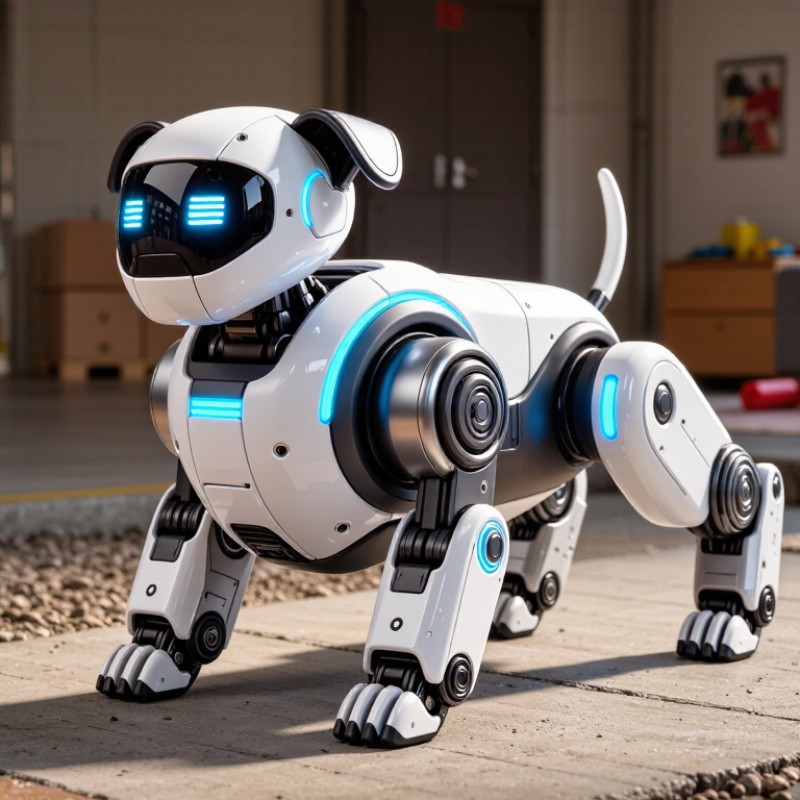
Define Your Needs and Intended Use
Before comparing features, describe what the robot dog must do in an ordinary week. Is it for interactive play, programming practice, mobility research, or routine demonstrations? Be specific. A companion for a quiet apartment needs different features from a learning tool used in a busy classroom. Note who will operate it, how much setup time is realistic, and whether it must move across rugs, door sills, or smooth floors.
Turn those needs into simple tests. For example, check whether it can step over a two-centimeter threshold, respond clearly in a noisy room, and run through a typical session without frequent charging. If coding matters, examine whether its controls suit the user’s current skill level and allow gradual learning. Look at cleaning, replacement parts, and safe handling too. Small details matter.
Try the robot in the actual space when possible, rather than relying only on demonstrations. Observe how it behaves when a command is missed or a sensor is blocked. Ask what data it collects and how settings can be adjusted. A feature list can look impressive; daily use may feel different. I would also write down the intended use before shopping, though priorities sometimes change once people try the robot. That is worth admitting.
Compare AI Robot Dog Types and Capabilities
AI robot dogs in 2026 range from simple interactive toys to programmable learning kits and more capable home companions. A toy may bark, follow a hand, or react to touch, but usually offers limited customization. A STEM model often adds coding controls, sensors, and repeatable movement routines. Companion-style models may recognize voices or respond to household activity, though performance can vary with noise, lighting, and setup. No single type wins every home.
Compare capabilities you can test, not just features listed on a box. Check whether obstacle detection works around chair legs and whether voice commands still register across a room. Look for clear privacy settings, replaceable parts, and an app that explains what data the robot uses. Battery life matters, too: a dog that needs charging after a short play session may frustrate children. “AI” can describe very different functions. Read demonstrations carefully, and leave room for disappointment; a clever response is not the same as reliable judgment.
Tips: Match the robot to its daily role. For playful interaction, prioritize sturdy construction and simple controls. For learning, choose adjustable coding tasks and accessible documentation. Ask the seller about updates, repairs, and offline features before buying.
How to Choose an AI Robot Dog in 2026
Compare common robot-dog types by the capabilities they are typically designed to prioritize.
Ratings are qualitative comparisons of typical design priorities, not standardized test results or specifications. Capabilities vary by model; check individual specifications before buying.
Evaluate Sensors, AI Features, and Performance
Begin with the sensors. A robot dog needs more than a camera: depth sensing, inertial measurement, and contact detection help it judge steps, balance, and obstacles. Ask how it behaves in dim rooms, on rugs, and near reflective surfaces. Request recorded test results, not just a polished demonstration. Small gaps matter.
The International Federation of Robotics’ World Robotics 2024 report says nearly 200,000 professional service robots were sold in 2023, a 30% year-over-year increase. That figure covers many robot types, not robot dogs; treat it as market context, not a quality score. For AI features, check whether the unit can recognize spoken commands, map rooms, and recover safely after losing its route. NIST’s AI Risk Management Framework identifies reliability, safety, and validity as key trustworthiness considerations. Ask what happens when recognition fails. Does the robot stop, or guess?
Measure performance on the surfaces you actually have. Test turning, stair detection, noise, battery life, and recovery after a gentle push. Repeat each test. One successful run proves little. I would still distrust a perfect showroom demo; an uneven rug can expose weak balance control. Compare published test conditions carefully, since “obstacle avoidance” may mean very different things.
Check Safety, Privacy, Compatibility, and Support
A useful AI robot dog should behave predictably around people, furniture, and pets. Check how it handles stairs, tight turns, and a blocked path, and whether you can stop it quickly. Ask what sensors detect obstacles and whether safety features still work when the network drops. NIST’s IoT cybersecurity baseline, NISTIR 8259A, also identifies secure software updates, data protection, and controlled access as important device capabilities. A polished demo is not enough.
Privacy deserves a close look. Does the dog record audio or video? Can you disable recording, delete stored data, and use basic functions without cloud access? Pew Research Center’s 2023 survey found that 73% of U.S. adults felt they had little or no control over company data collection; 67% understood little or nothing about how companies used their data. Those figures are a reminder to read settings before bringing a camera-equipped device into your home. It can feel tedious.
Check compatibility with your phone’s operating system, home Wi-Fi, and any smart-home equipment you already use. Confirm whether key features need an app, a subscription, or a constant internet connection. Then look for a clear support period, repair options, replacement parts, and a way to reach a human for troubleshooting. I would not assume that a long feature list means long-term support; those are different promises. A brief setup test can reveal awkward controls or unreliable connections before the dog is roaming your living room.
Compare Total Costs and Test Before Buying
An AI robot dog’s sticker price rarely tells the whole story. Before comparing models, build a two-year ownership estimate: purchase price, shipping, taxes, spare batteries, joint or paw repairs, app fees, and warranty coverage. Ask for written replacement-part prices and typical service times. That matters. The International Federation of Robotics’ World Robotics 2024 report recorded 19.1 million personal and domestic service robots sold in 2023. This broad category includes many types of devices, not just robot dogs, so treat it as market context—not proof of reliability.
Compare the full cost of ownership, not just the checkout total. Check whether mapping, voice features, or remote control require a subscription. Confirm what still works when Wi-Fi drops or a paid plan ends. A low-cost model can become frustrating if a damaged sensor takes weeks to replace. I would also price a second battery before deciding; advertised playtime may not match repeated runs on carpet.
Arrange a hands-on trial, ideally in the room where the dog will operate. Watch it cross a rug edge, turn beside a chair leg, and respond to a familiar voice from across the room. Test its obstacle detection with ordinary household objects, not only an empty showroom floor. Ask to see the battery level after a short session. Then test setup yourself. A polished demonstration can hide confusing controls, and I would not assume I could learn them later.
How to Choose an AI Robot Dog in 2026 - Compare Total Costs and Test Before Buying
Cost assumptions: The 3-year total adds the estimated purchase price, setup, three years of software or support, and estimated repairs. It excludes tax, shipping, financing, and staff or instructor time. Actual prices and service costs vary by configuration and seller; confirm them in writing before purchase.
Conclusion
Choosing an AI robot dog in 2026 starts with a clear idea of how you plan to use it. Consider whether you want a playful companion, a learning tool, or a robot for practical tasks, then compare different types by their mobility, interaction style, and capabilities. Look beyond appearance to evaluate sensors, navigation, voice or gesture recognition, battery life, and how reliably the robot responds in everyday settings.
Before buying, review safety features, privacy controls, compatibility with your devices, and the quality of available support. Consider the full cost, including accessories, maintenance, software services, and replacement parts, rather than focusing only on the purchase price. If possible, test the AI robot dog in person or use a trial period to check whether it is easy to operate and suits your environment. A careful comparison can help you choose a model that fits your needs, expectations, and budget.